
Search intent decides the page shape
A high intent SEO page should answer commercial questions quickly: what you offer, who it is for, where you serve, what proof supports the claim, and what the next step is. Long content only helps when it reduces uncertainty.
Topical authority needs a clear map
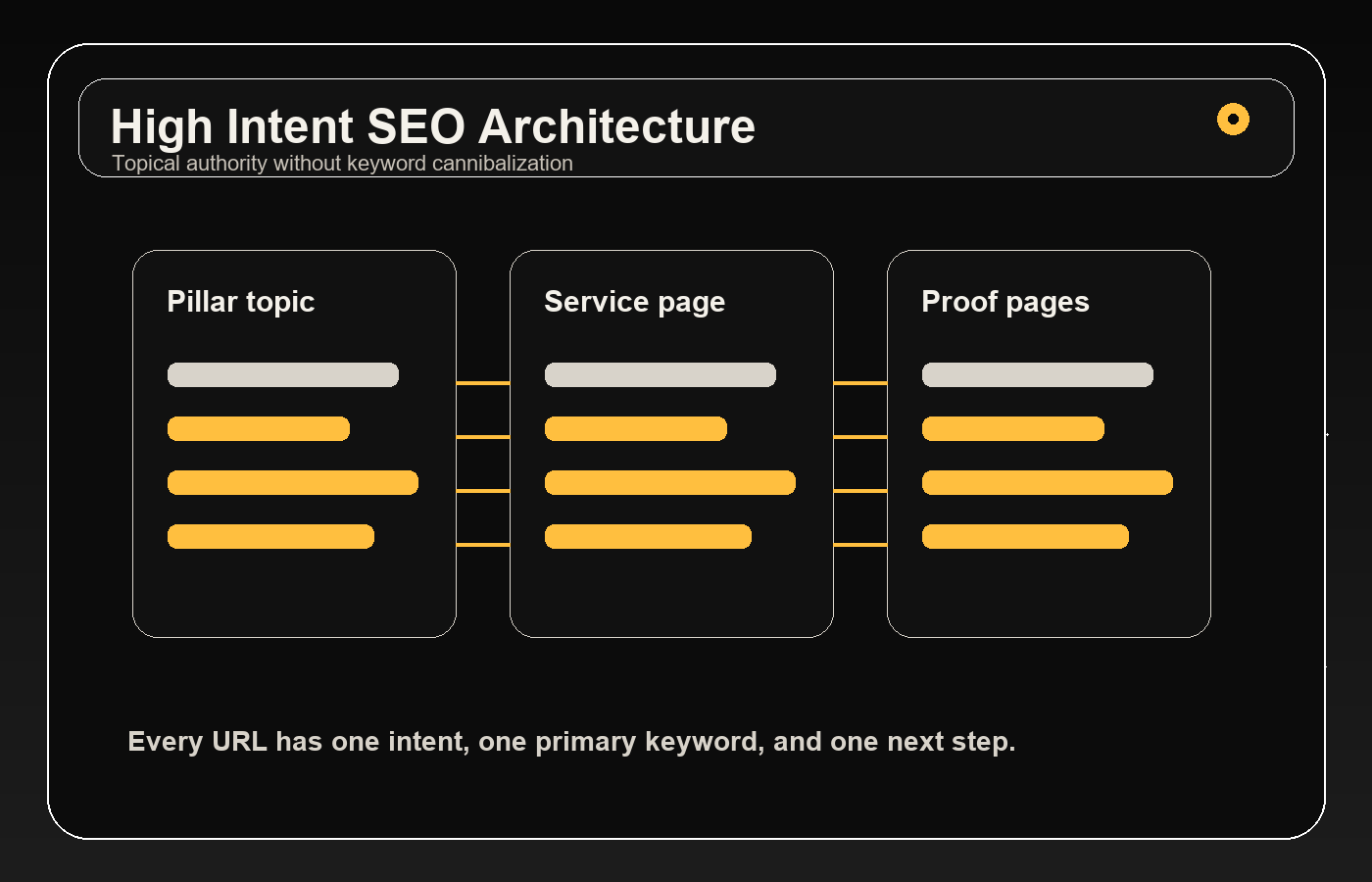
One page should not target every keyword. Build a topic cluster where the service page owns the money keyword, supporting articles answer related questions, and case or proof pages validate the promise. This structure creates semantic coverage without cannibalizing the same search query.
Internal links should guide decisions
Internal links are not just for crawlers. They should move users from educational content to service pages, from service pages to proof, and from proof to contact. Use descriptive anchor text that matches the next step, such as SEO strategy, landing page clarity, or analytics setup.
Proof belongs inside SEO content
Strong service pages include examples, process detail, trust markers, market relevance, and FAQs. This helps users decide and gives search engines clearer entity signals around expertise and relevance.
Technical SEO still matters
Fast loading, clean headings, descriptive alt text, schema, canonical URLs, and accessible navigation protect the work. Technical quality does not replace strategy, but weak technical foundations can stop good content from performing.