
Why traffic is easy to blame
When performance slows, it is tempting to add more paid media budget, publish more SEO content, or launch another campaign. That can help, but only when the underlying growth engine is aligned. If search intent, ad promise, landing page content, qualification rules, and dashboard metrics all tell different stories, more traffic simply sends more people through a confusing journey.
What a growth system includes
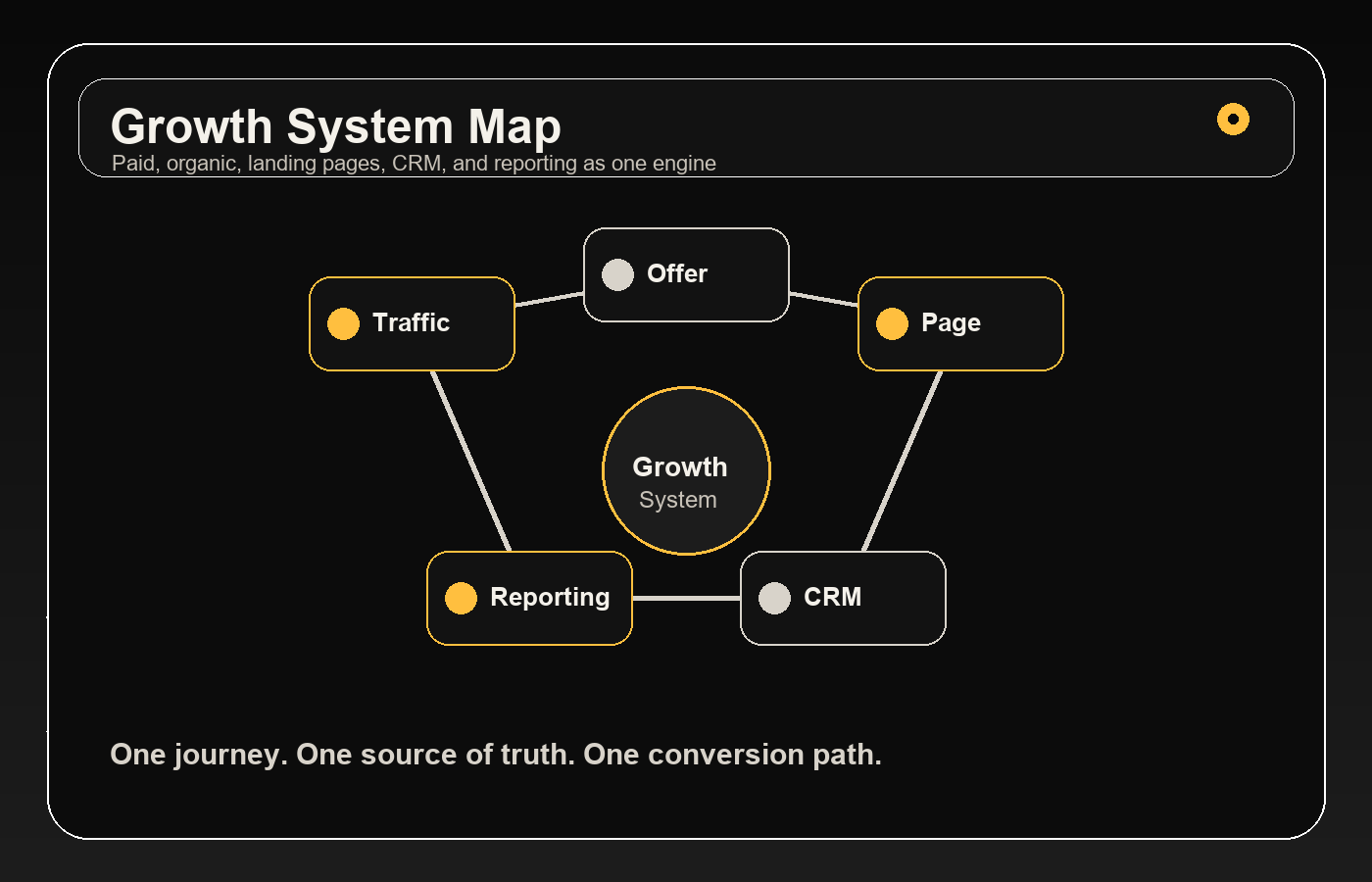
A useful growth marketing system connects acquisition channels to conversion assets and revenue feedback. Paid search captures urgent demand. SEO builds durable visibility for high intent topics. Paid social educates and retargets the market. Landing pages clarify the offer. Analytics and CRM data show whether leads become pipeline, not just form fills.
Topical mapping keeps teams focused
Topical mapping gives each page and campaign a defined job. One pillar page targets the broad commercial theme. Supporting pages answer narrower buyer questions. Internal links move users from education to decision pages. This prevents keyword cannibalization because every URL has a unique search intent, primary keyword, and conversion role.
How to diagnose the system
Start by mapping the journey from impression to qualified lead. Check whether the ad headline matches the landing page promise. Review whether SEO pages link to relevant service pages. Audit form fields, CRM routing, and dashboard definitions. The goal is not more data; it is cleaner decision signal.
What to improve first
Fix message match, conversion clarity, and measurement before scaling spend. Then use performance data to decide whether SEO, paid media, CRO, or creative testing deserves the next investment. Strong systems compound because every channel learns from the same source of truth.