
Give each location a real page
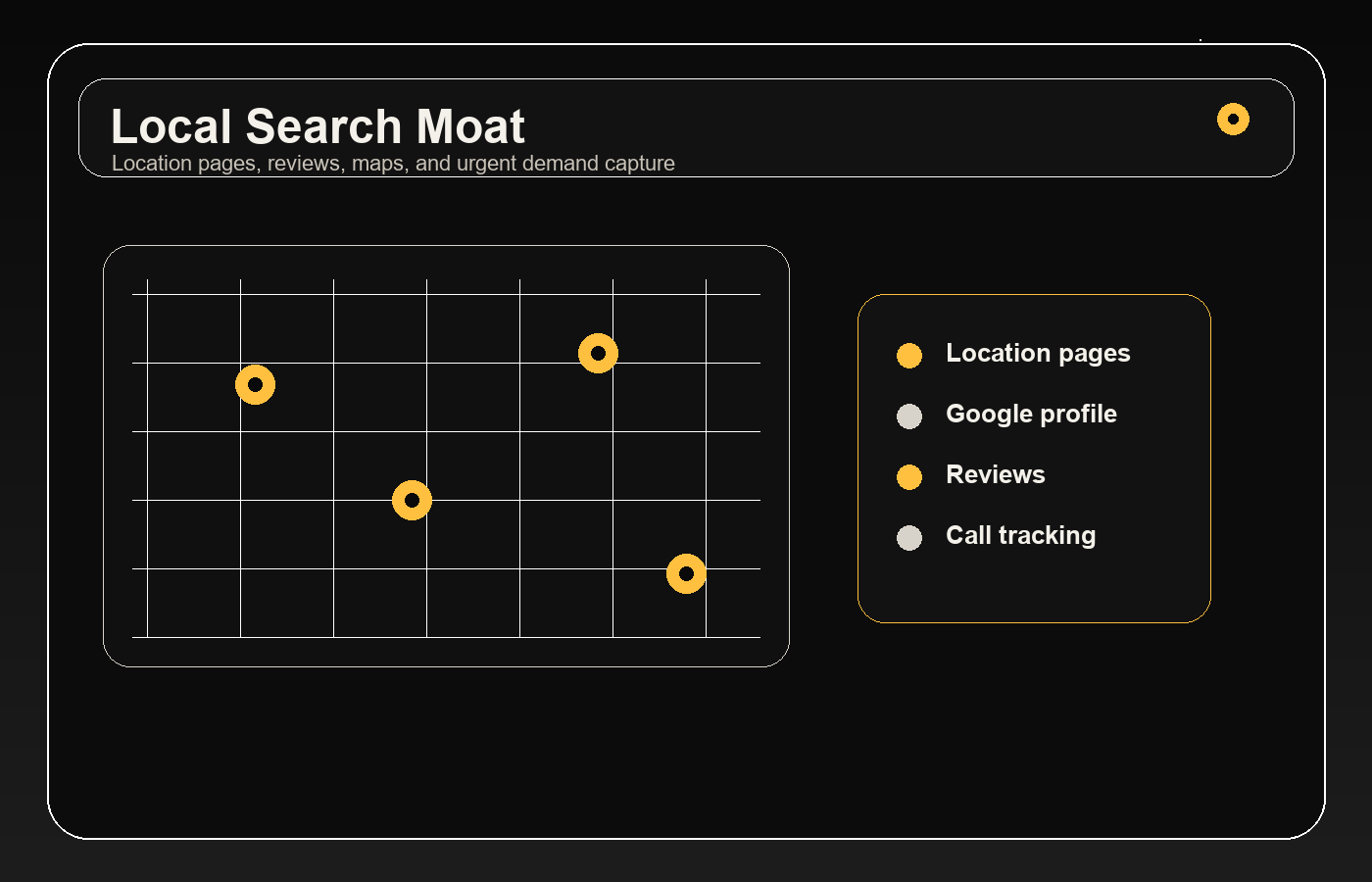
A location page should do more than repeat a city name. It should explain the service, show local relevance, answer buyer questions, include proof, and make contact easy. Thin doorway pages weaken trust and can compete with each other.
Support maps with website strength
Google Business Profile visibility is stronger when the website reinforces the same services, locations, categories, and proof. Internal links from service pages to location pages help clarify relevance.
Reviews need context
Review volume matters, but review quality and topical language matter too. Encourage customers to mention the service, outcome, and location naturally. Then reflect common objections and proof points on the page.
Use paid search for urgent demand
Local SEO compounds over time, while paid search can capture urgent service intent immediately. The best mix uses paid search to learn which terms and locations convert, then feeds that learning into SEO priorities.
Avoid cannibalizing local pages
Each location page should have a unique target area, unique proof, and unique conversion context. Do not publish many near-identical pages chasing the same keyword pattern.