
Start with decisions, not dashboards
Before adding tags, define the decisions the business needs to make. Which campaigns deserve more budget? Which landing pages need CRO work? Which leads become pipeline? Tracking should support these decisions directly.
Separate activity from intent
Clicks, scrolls, and page views can be useful diagnostics, but they are not equal to commercial intent. Prioritize qualified form submissions, booked calls, demo requests, product trials, and sales accepted leads.
Connect marketing data to CRM reality
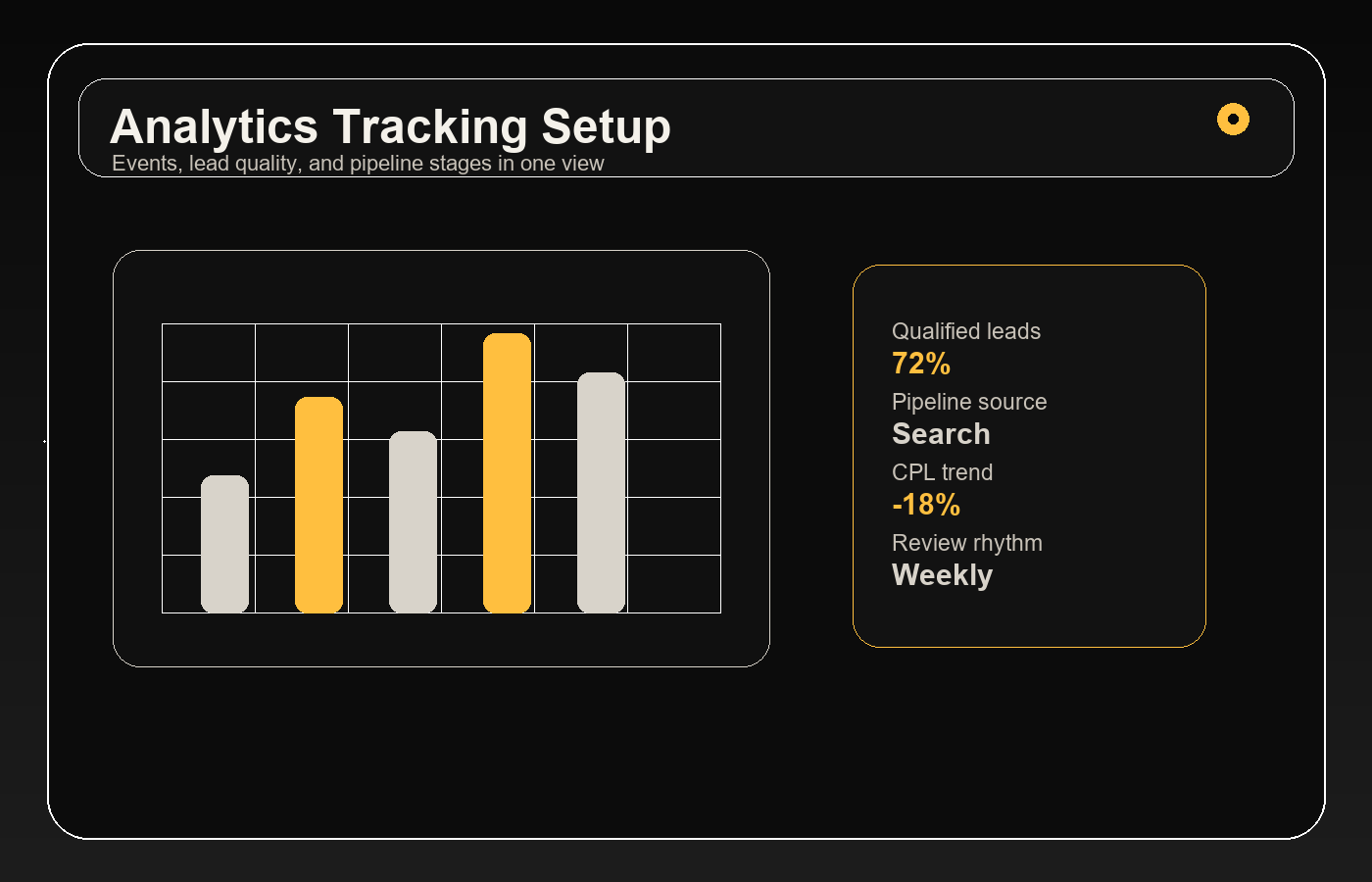
When lead quality is missing, marketing reports drift away from revenue. Bring source, campaign, landing page, qualification status, and pipeline stage into one view. This gives paid media and SEO teams feedback they can act on.
Keep naming conventions simple
Campaign names, UTMs, event names, and form labels should be consistent. Messy naming creates reporting confusion and makes long-term analysis harder than it needs to be.
Review the setup quarterly
Markets, campaigns, and funnels change. A quarterly tracking review catches broken events, duplicate conversions, missing UTMs, and dashboard metrics that no longer reflect business goals.