
Start with search term and placement waste
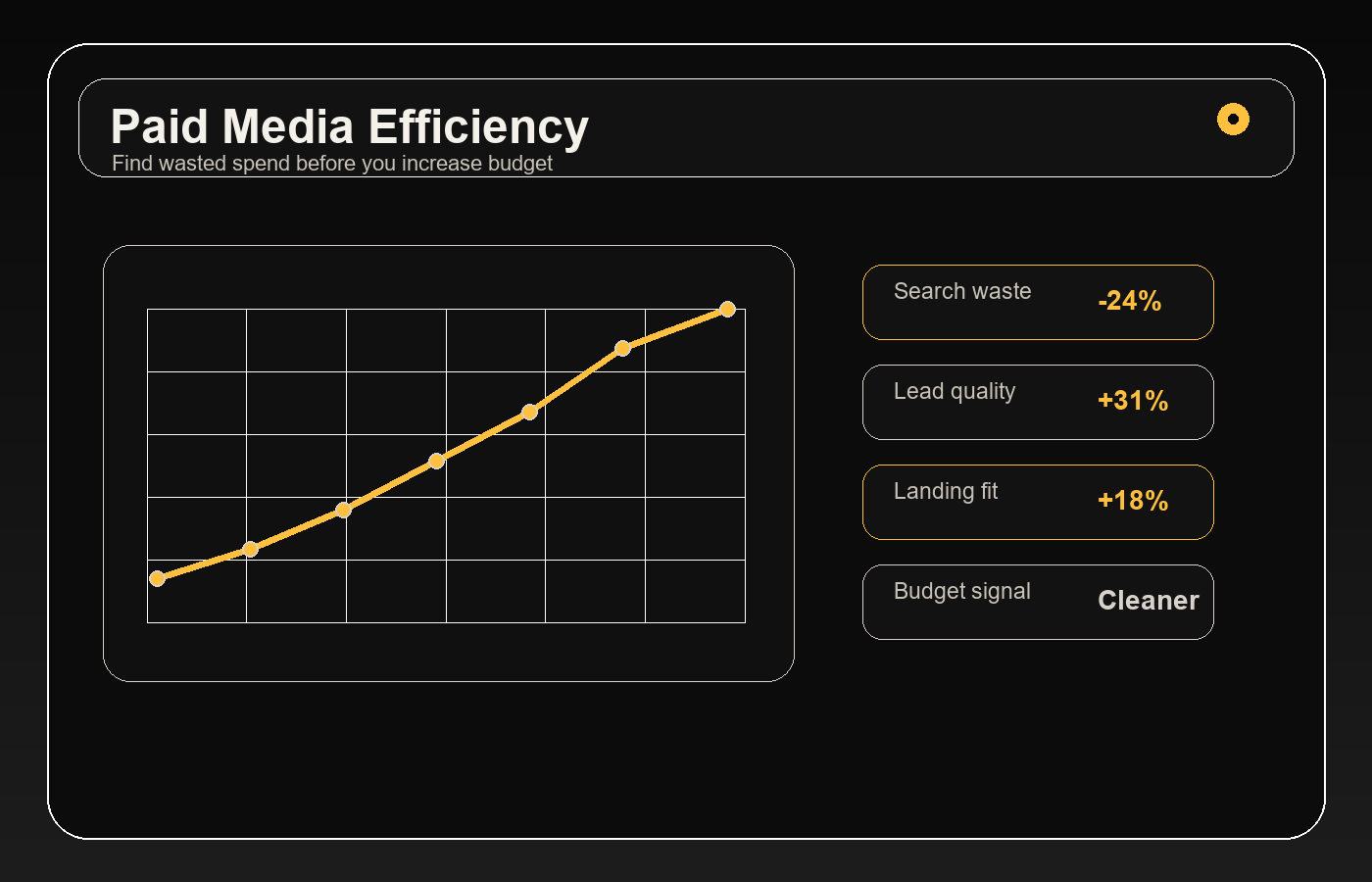
Paid search waste often hides in loose match types, weak negatives, and campaigns that pay for research intent instead of buying intent. Paid social waste often hides in broad creative, poor exclusions, and placements that generate cheap clicks but weak pipeline. A paid media audit should separate traffic volume from commercial value.
Improve message match before increasing budget
The promise in your ad should continue cleanly on the landing page. If the campaign says fast implementation, the page should show implementation proof. If the keyword signals local service urgency, the page should show location relevance. Better message match improves conversion rate and lowers wasted spend without reducing reach.
Measure lead quality, not just cost per lead
A low CPL can be expensive when sales teams reject the leads. Track qualified lead rate, booked call rate, pipeline movement, and revenue quality. This gives paid media teams the feedback they need to optimize toward business outcomes instead of vanity efficiency.
Use budget rules with intent tiers
Separate campaigns by intent. High intent search can usually carry stronger conversion targets. Prospecting social may need assisted-conversion logic. Retargeting should be judged by incremental support, not last-click credit alone. Intent-based budget rules reduce internal channel conflict.
Build a weekly optimization rhythm
Every week, review wasted queries, poor-fit audiences, underperforming creatives, and landing page drop-offs. Small fixes compound quickly when they are tied to one reporting model.